
How to Build a Last-30-Days Research Brief From URLs
It's the first Monday of the month. You need to know what actually moved in your space over the last 30 days — the Hacker News thread everyone argued about, two competitor changelogs, a pricing page that quietly changed, and the four blog posts your team kept forwarding. You have 23 tabs open and 40 minutes before standup.
Pasting those raw URLs into ChatGPT or Claude rarely works the way you hope. Some links the model can't open. Others come back as walls of navigation menus, cookie banners, and "related articles" widgets. Your summary ends up thin, and the citations are a mess.
This guide shows a faster, repeatable workflow: collect your recent URLs, convert each one to clean Markdown, and bundle them into a single last 30 days research brief from URLs that your AI tool can actually read and cite. It takes about 20 minutes the first time and under 10 once you've saved the template.

In this guide:
- Why build a research brief from URLs?
- Step-by-step: from URLs to a research brief
- Pro tips for better results
- FAQ
- Conclusion
Why Build a Research Brief From URLs?
A research brief from URLs is a single, clean document that gathers everything published in the last 30 days about a topic, converted from messy web pages into structured Markdown. It gives an AI model citable, noise-free input — so summaries are more accurate and you can repeat the same review every month.
The "last 30 days" framing took off after mvanhorn/last30days-skill hit GitHub Trending on June 10, 2026 — an AI agent skill that pulls recent activity on a topic from Reddit, X, YouTube, Hacker News, Polymarket, and the open web. The idea resonated because most decisions need recent signal, not an all-time summary. A rolling 30-day window is short enough to stay current and long enough to catch a real trend.
The harder problem is input quality. An LLM is only as good as what you feed it, and raw HTML carries navigation bars, ads, comment widgets, and tracking scripts. In our testing, a typical article page is 70–90% boilerplate by character count — the model burns context on junk and sometimes summarizes the sidebar instead of the article. Markdown strips a page down to headings, body text, and links, which is exactly the part you wanted.
This workflow pays off most for three groups: founders tracking competitor moves, analysts writing weekly or monthly memos, and content teams running topic research. Once the brief is a template, the same ten minutes each month produces a consistent, comparable output instead of a one-off scramble.
Step-by-Step: From URLs to a Research Brief
Building the brief takes five steps: collect your last-30-days URLs, convert each one to Markdown, bundle them into one file, feed that file to an AI tool with a structured prompt, then save the setup as a reusable template. Here is the exact workflow.
Step 1: Collect Your Last-30-Days URLs
Start by pulling links from where your topic actually lives. Sort Hacker News by date, scan competitor changelogs and blogs, check product and pricing pages, skim newsletter issues, and grab the standout X threads or YouTube videos.
Drop everything into a plain list — one URL per line, in a spreadsheet column or a scratch note. Set a hard date cutoff: anything older than 30 days goes into a separate "context" bucket, not the main brief. Aim for 8–20 links. Fewer and you miss signal; many more and the brief loses focus.
Step 2: Convert Each URL to Clean Markdown
Convert each link to Markdown before you hand it to any AI. Open the page, run it through a URL-to-Markdown converter, and you get the headings, body text, and links with navigation and ads removed.
The expected result: each source becomes 200–2,000 words of clean text you can scan at a glance and a model can parse without choking on markup. This single step is what separates a sharp brief from a vague one — clean input in, citable output out.
Step 3: Bundle the Markdown Into One Brief
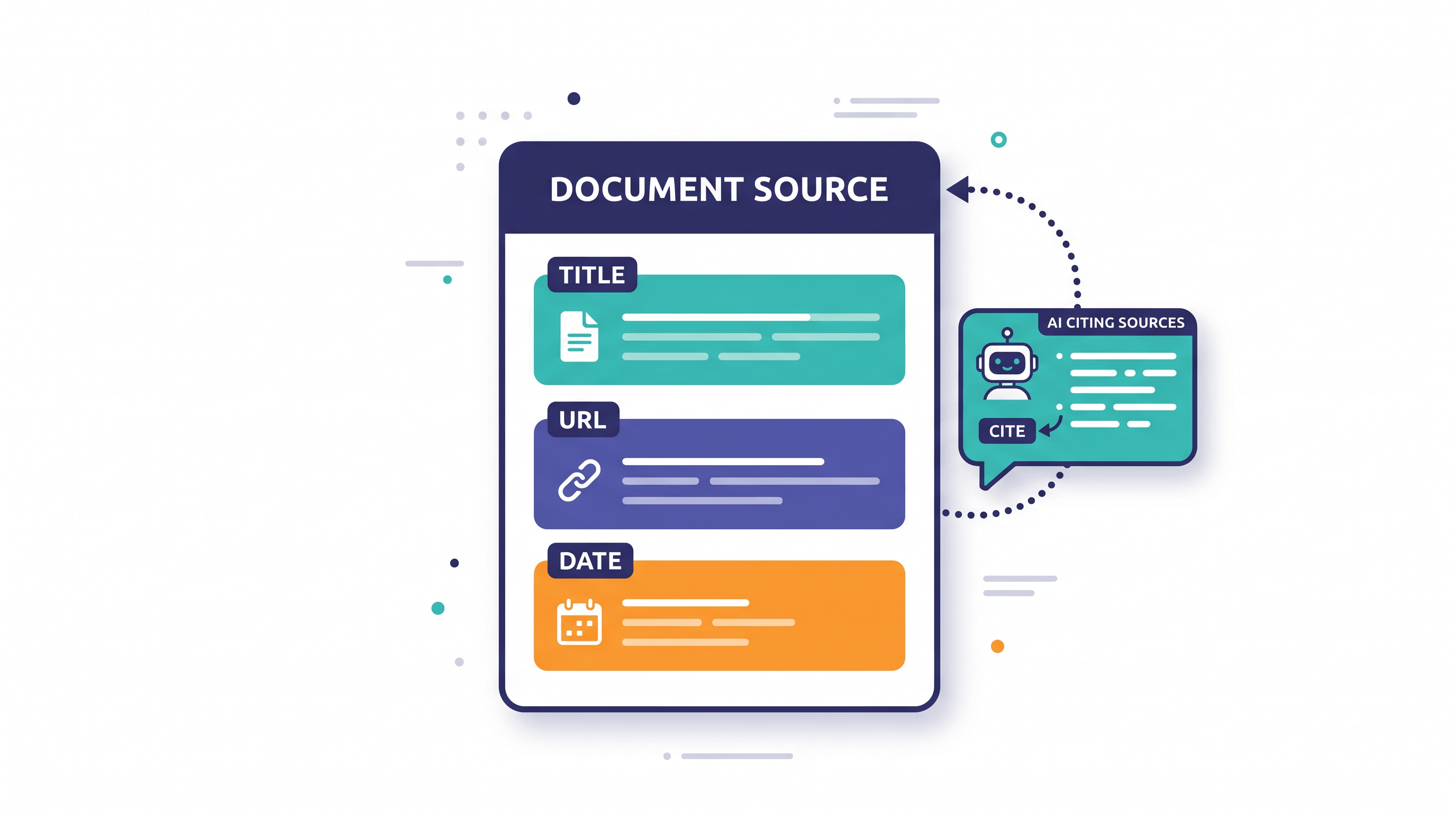
Paste each converted page into a single document, separating sources with a header line that carries the title, URL, and publish date — for example, ## Source: <title> — <url> (published 2026-06-02). Keeping the URL and date next to each block is what makes the AI's later citations accurate.
This is where a converter that handles many formats saves real time. Paste each link into URL to Any and select Markdown — each conversion takes about 2 seconds. You can also run a page through the meta tags extractor to grab its exact publish date for the citation header. The output of this step is one file — your raw research brief — with clearly labeled, clean sources.
Step 4: Feed the Brief to Your AI Tool
Paste the bundled Markdown into ChatGPT, Claude, Gemini, or your agent of choice with a structured prompt. A prompt that works well:
"Below is a research brief of sources from the last 30 days, each labeled with its URL and date. Produce: (1) a 5-bullet executive summary, (2) a table with each source, a one-line takeaway, and its link, (3) notable trends that appear across multiple sources, and (4) open questions. Cite the source URL for every claim."
Because each block carries its own URL, the model can cite specific sources instead of vague "some articles say" hand-waving. If a single source is very long, run it through an AI Summarizer first to compress it before it goes into the brief.
Step 5: Save It as a Repeatable Template
Save three things: your prompt, your source-list structure, and your output format. Next month, swap in fresh URLs and rerun the same steps — the brief goes from a 20-minute build to a 10-minute refresh.
Keep last month's brief, too. With both files on hand, you can ask the AI "what changed since the previous brief?" and get a clean diff of your space instead of starting cold each time.

Pro Tips for Better Results
The quality of a research brief comes down to source selection, clean conversion, and a consistent prompt. A few habits make each monthly run faster and the output more citable.
- Label every source with its publish date and URL. Models hallucinate dates; giving them the real one prevents "recent" claims about a two-year-old post.
- Cap the brief at about 15 sources. Beyond that, signal dilutes and you risk hitting context limits. Split a broad topic into sub-briefs instead.
- Convert before you summarize. Feeding clean Markdown instead of a raw link removes the model's need to fetch the page — which often fails — and cuts token cost noticeably.
- Keep a separate "context" appendix. Older but foundational links go here, clearly walled off from the 30-day window, so the model doesn't blur old and new.
- Diff month over month. Save every brief and ask the model to compare this month's against last month's. That comparison is where the genuinely new signal shows up.
FAQ
What is a last-30-days research brief?
It's a single document that collects everything published about a topic in the past 30 days, converted from web pages into clean Markdown so an AI tool can summarize and cite it. Founders, analysts, and content teams use it to produce a consistent monthly review of their space.
Why convert URLs to Markdown before using AI?
Markdown strips out navigation, ads, and scripts, leaving only headings and body text. This gives the model cleaner input, lowers token cost, and avoids the common failure where an AI can't open a link or summarizes the wrong part of the page.
How many URLs should a research brief include?
Aim for 8–20 sources for a focused monthly brief. Fewer than 8 and you may miss signal; more than 20 dilutes focus and can exceed an AI's context window. Split large topics into separate sub-briefs.
Can I automate this workflow?
Partly. You can script URL collection from RSS feeds and APIs, and tools like the last30days-skill that trended on GitHub in June 2026 automate gathering recent activity. The conversion-to-Markdown and bundling steps run in seconds per link with a converter, and the AI summary fires from a saved prompt.
What AI tools work with the brief?
Any chat or agent that accepts pasted text — ChatGPT, Claude, Gemini, or your own. Because the brief is plain Markdown with labeled sources, it stays portable across tools and easy to version month to month.
Conclusion
A repeatable research brief turns a pile of recent tabs into a clean, citable monthly review in five steps: collect your last-30-days URLs, convert each to Markdown, bundle them with source labels, feed the file to your AI tool, and save the setup as a template. The work that used to eat an afternoon becomes a ten-minute habit.
Start small. Pick one topic you already track, gather this month's links, and build your first brief. Next month, you'll just swap the URLs.
Ready to turn your reading list into a clean research brief? Try URL to Any free → — convert any web page to Markdown, PDF, text, and 10+ formats in seconds, no signup required.
Last updated: June 10, 2026