Testing Ads in ChatGPT: Principles, Privacy, Control
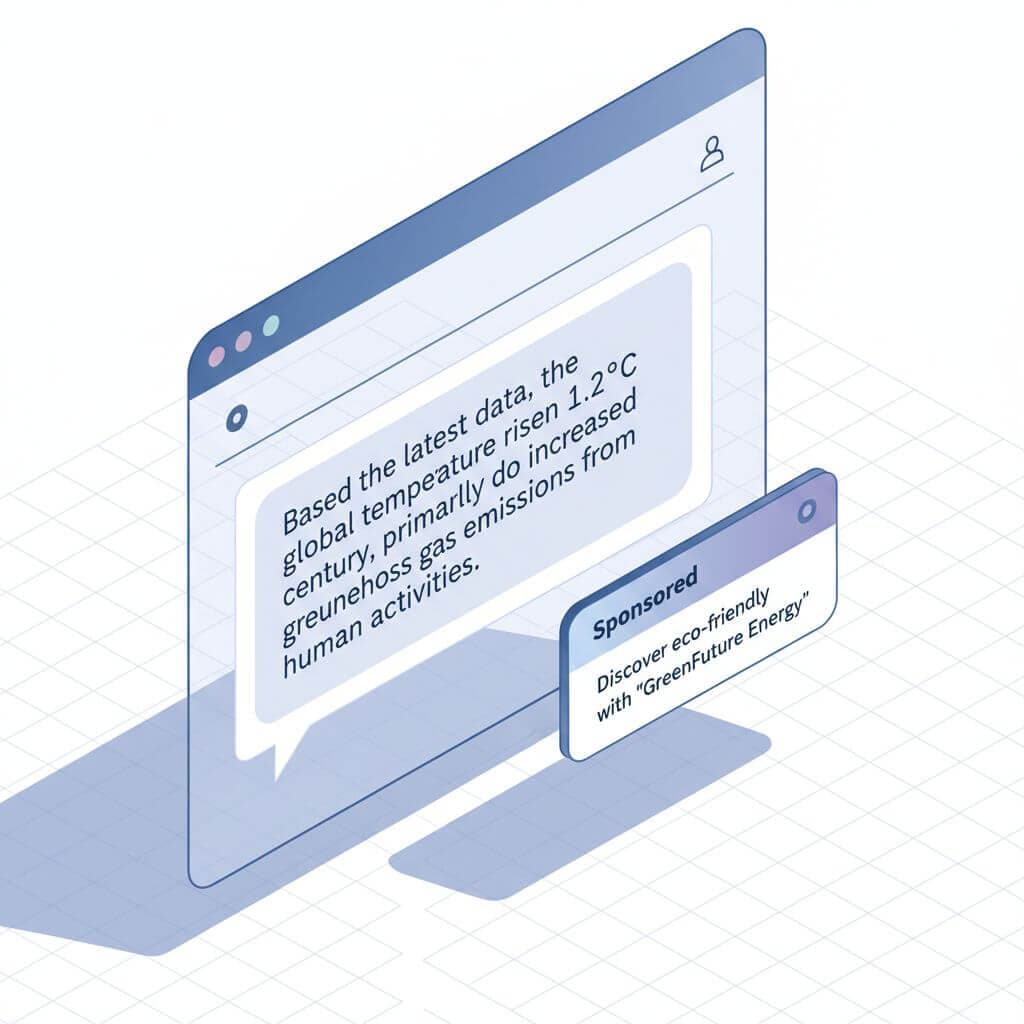
OpenAI has begun testing ads in ChatGPT for logged-in adult users in the U.S. on the Free and Go tiers. Plus, Pro, Business, Enterprise, and Education remain ad-free. Ads are clearly labeled and do not influence ChatGPT’s answers; advertiser access to user conversations is blocked, with only aggregate performance reporting shared. The stated goal: sustain broader access to powerful AI features while preserving trust, privacy, and control.
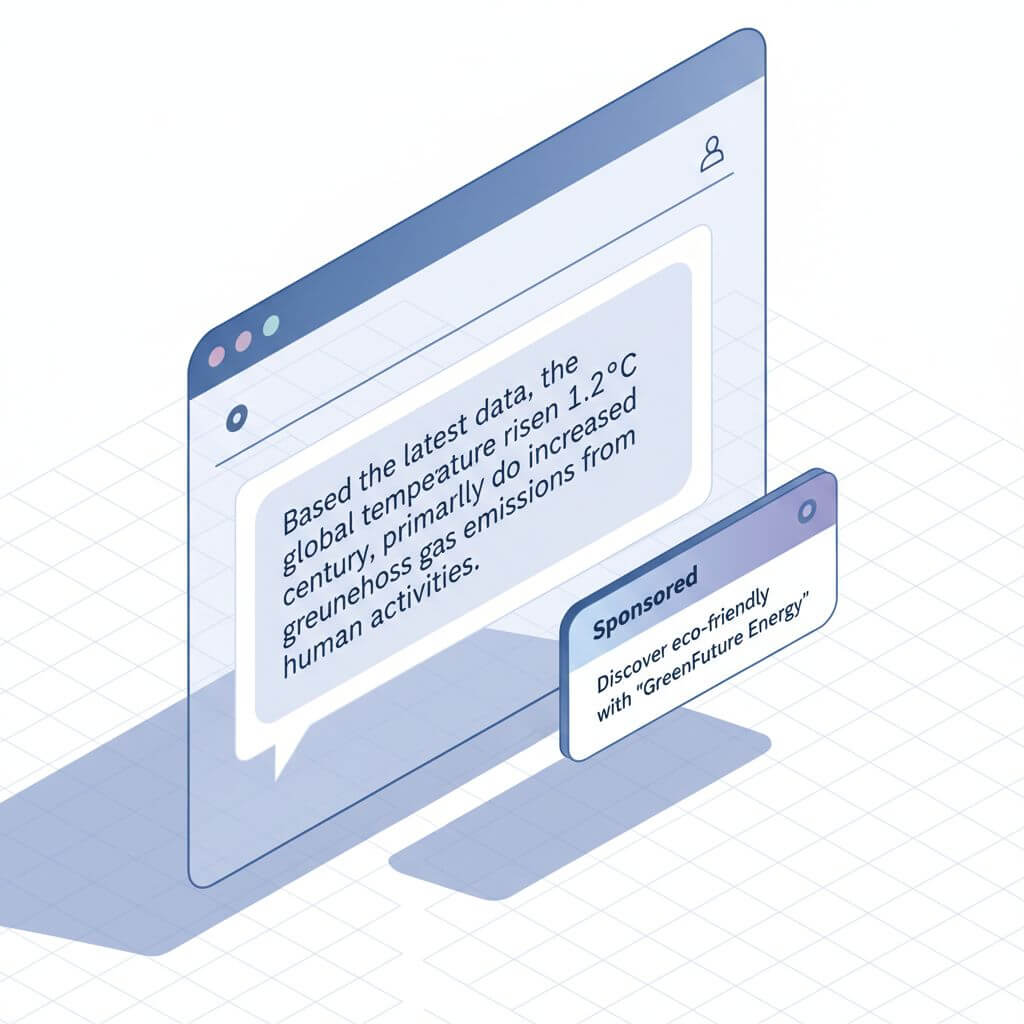
Table of contents
- What’s changing in ChatGPT with ads
- Principles guiding the test
- Practical implications and recommendations
- Risks, safeguards, and what to watch
- What’s next
- FAQ
- Conclusion
What’s changing in ChatGPT with ads
OpenAI is running an ad test designed to learn from real-world use before broader expansion. The test has three key dimensions: tiers, placement/labeling, and selection.
Who will see ads
- Ads appear for logged-in adult users on Free and Go tiers.
- Plus, Pro, Business, Enterprise, and Education tiers will not have ads.
- Users on the Free tier can opt out of ads in exchange for fewer daily free messages.
- Accounts identified or predicted as under 18 will not see ads.
Where ads appear and how they’re labeled
- Ads are visually separated from the organic answer and clearly marked as “sponsored.”
- Ads do not change or shape the answer content; answer generation remains independent.
How ad selection works (during the test)
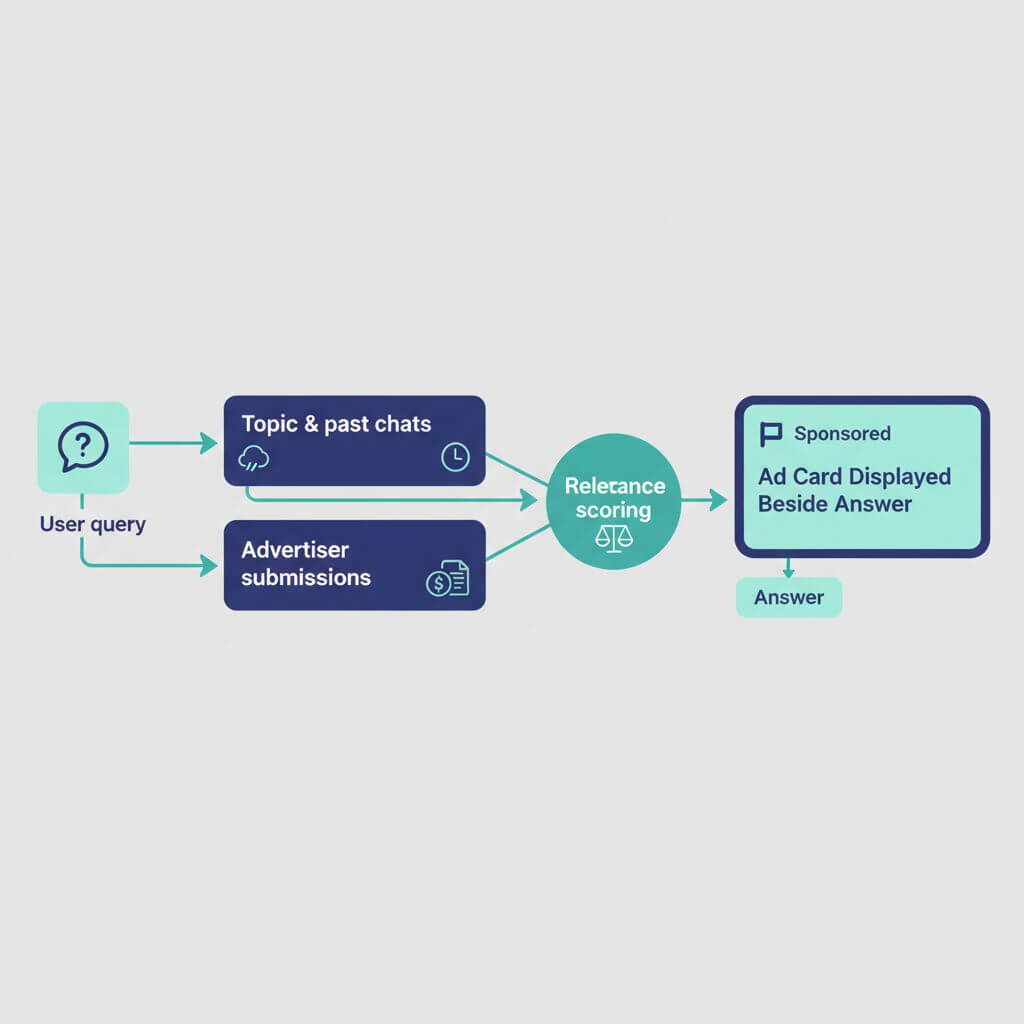
- Matching considers the topic of your current conversation, your past chats, and previous ad interactions.
- If you’re discussing recipes, you might see ads for meal kits or grocery delivery.
- When multiple advertisers are relevant, the most relevant ad is shown first.
Principles guiding the test
OpenAI previously outlined principles for advertising in ChatGPT; this test operationalizes them. Here’s how they translate for users and advertisers.
Mission alignment
- Rationale: Keeping Free and Go fast and reliable requires substantial infrastructure investment.
- Role of ads: Help fund broader access to AI via a high-quality free experience and low-cost tiers, while improving system intelligence over time.
- Choice: If you prefer an ad-free experience, upgrade to Plus/Pro or opt out of ads (with fewer daily free messages on Free).
Answer independence
- Answers are optimized for helpfulness, not advertiser objectives.
- Ads remain separate, clearly marked, and do not influence the model’s response.
Conversation privacy
- Advertisers do not access chats, chat history, memories, or personal details.
- Advertisers receive only aggregate metrics (e.g., views, clicks).
- No ads near sensitive or regulated topics (e.g., health, mental health, politics) during the test.
- Expect ongoing guardrails to minimize narrow targeting and reduce harmful or misleading ads.
Choice and control
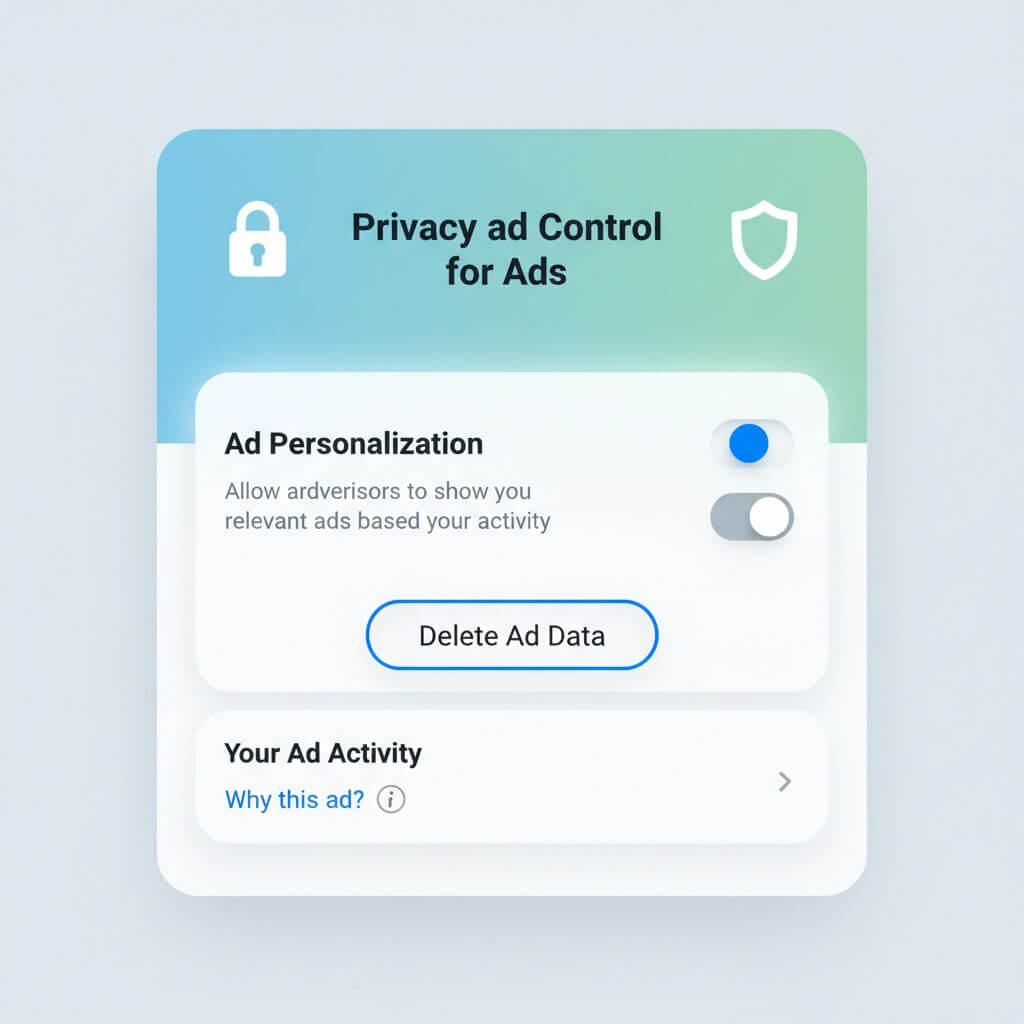
- Dismiss ads; share feedback; see why an ad was shown.
- Delete ad data with one tap; manage ad personalization any time.
Long-term value
- ChatGPT is often used during exploration and decision-making.
- Well-matched ads can surface relevant products or services at the right moment.
- Clear separation of ads and answers remains a core design constraint.
Practical implications and recommendations
This test introduces a new interaction pattern: sponsored content alongside conversational reasoning. Here’s what it means in practice.
For users
- Maintain trust: Answers remain independent. Treat ads as optional, clearly labeled context.
- Control your experience: Use dismiss, feedback, and “why this ad” to tune relevance. Delete ad data if desired.
- Consider your tier: If ads are distracting and you use ChatGPT heavily, Plus/Pro may be a better fit; Free users can also opt out of ads for fewer daily messages.
- Sensitive use cases: Ads won’t appear near sensitive topics—still, be mindful with personal or regulated queries.
For advertisers
- Relevance is king: Ad matching is contextual to the conversation and past ad interactions. Tailor creative to conversational intent (e.g., clear value props, concise CTAs, frictionless landing pages).
- Creative format: Expect compact, utility-first formats that complement a reasoning-first interface. Lead with clarity over flash.
- Brand safety: Restricted categories (e.g., health, politics) reduce risk but also limit reach. Invest in compliant, broadly useful offers.
- Measurement: Plan for aggregate reporting. Success hinges on relevance, CTR, and downstream conversion quality more than narrow audience targeting.
- Early participation: The advertiser program will evolve (formats, objectives, buying models). Interested businesses can visit openai.com/advertisers for updates.
Risks, safeguards, and what to watch
- Trust erosion risk: If ads feel intrusive or ambiguous, trust suffers. Countermeasure: visible labels, strict separation from answers, user controls.
- Relevance decay: Poor matching undermines usefulness. Countermeasure: use feedback signals and progressive learning to refine targeting.
- Sensitive-topic leakage: Strict topic filters lower risk; iteration is needed to avoid over- or under-blocking.
- Incentive alignment: Funding free access via ads is reasonable if it doesn’t bias output. Keep audits to ensure independence is intact.
- UX overload: Too many or overly prominent ads can degrade flow. Watch dismissal rates, time-on-task, and user satisfaction trends.
What’s next
The stated focus is learning before scaling. Expect measured expansion as safeguards mature, with continued emphasis on privacy, safety, and bias prevention. For businesses, formats, objectives, and buying models will broaden over time, along with new ways to interact with consumers in ChatGPT.
What remains constant: answers stay independent and unbiased; conversations stay private; and people retain meaningful control over their experience.
FAQ
Do ads influence ChatGPT’s answers?
No. Answers are optimized for helpfulness and remain independent of advertising.
Which tiers include or exclude ads?
- Include: Free and Go (logged-in adult users in the U.S. during the test).
- Exclude: Plus, Pro, Business, Enterprise, Education.
Can Free users avoid seeing ads?
Yes. You can opt out of ads in exchange for fewer daily free messages. Or upgrade to Plus/Pro for an ad-free experience.
Do advertisers see my chats or personal data?
No. Advertisers do not access conversations, history, memories, or personal details. They receive only aggregate performance data (e.g., views, clicks).
Will ads appear near sensitive topics?
No. During the test, ads are not eligible to appear near topics like health, mental health, or politics.
Are minors shown ads?
No. Accounts identified or predicted as under 18 will not see ads during the test.
What controls do I have over ads?
You can dismiss ads, submit feedback, see why an ad was shown, delete ad data with one tap, and manage personalization any time.
How are ads selected?
Ads are matched to your current conversation topic, your past chats, and prior interactions with ads, with the most relevant advertiser prioritized when multiple match.
Conclusion
OpenAI’s ad test in ChatGPT aims to balance access and trust: fund a high-quality free experience while keeping answers independent, conversations private, and controls in users’ hands. The success of this model hinges on clarity (labels and separation), relevance (contextual matching), and consent (robust user control). If these hold, conversational ads can be additive rather than intrusive—surfacing helpful options precisely when people are exploring decisions.
If you need to quickly convert a webpage into PDF or Markdown for archiving or sharing, you can try URL to Any (https://urltoany.com).